
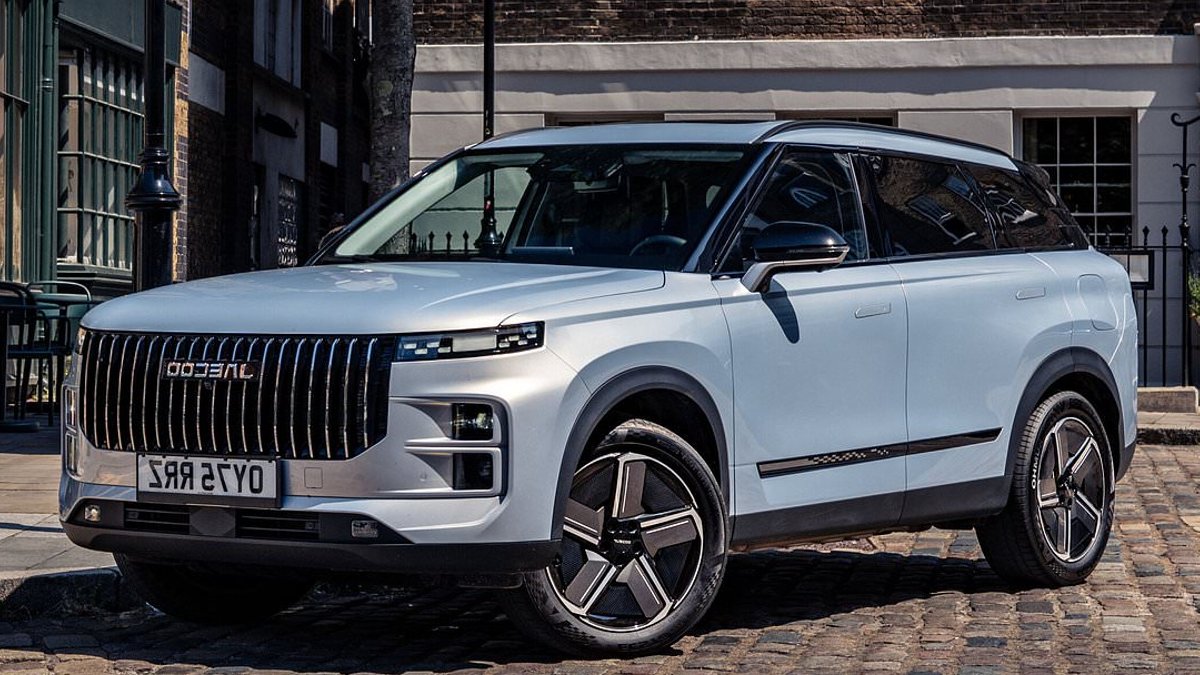
The Jaecoo 7, nicknamed the “Temu Range Rover” for its resemblance to the Range Rover Velar at half the price, claimed the top spot in UK new-car sales for the second time in 2026, with 10,813 deliveries in September, according to industry data.
The SUV’s success in both March and September—traditionally the busiest registration months due to new number-plate identifiers—signals a shift in British consumer preferences toward affordable Chinese models. These months are key indicators of consumer demand, with manufacturers launching their strongest offers to drive private-buyer sales.
The Jaecoo 7 narrowly beat the Tesla Model 3, which recorded 9,929 registrations in September, boosted by a fresh factory shipment. The Ford Puma, Britain’s best-selling car for the past three years, ranked third with 6,958 deliveries, though its year-to-date total of 42,926 units now trails the Jaecoo 7’s 39,473. This marks the first time the Puma has been overtaken in annual sales by a non-European model since records began.
Chinese brands accounted for 23% of all new-car deliveries in September, with BYD overtaking Kia to become the second-best-selling brand, recording 20,140 registrations. Volkswagen retained the top spot with 25,972 September sales, while MG ranked fourth with 18,026 units. MG’s own HS model joined the top ten at eighth place with 5,444 registrations, highlighting the growing presence of Chinese manufacturers in the UK market.
The Jaecoo 7’s parent company, Chery, which also owns Omoda and Lepas brands, reported 32,823 combined registrations in September through its retail network, capturing nearly all new-market growth. Meanwhile, established brands like Hyundai, Renault, and Ford faced sharp declines, with Hyundai dropping 32% year-on-year to 10,002 sales and Renault falling 30% to 6,721 units.
Reliability Concerns and Warranty Upgrades
Despite its sales success, the Jaecoo 7 has faced criticism for reliability. A What Car? survey of 40,000 drivers ranked it sixth from the bottom among 225 models, with a 71.9% dependability score. Around 30% of owners reported faults, including infotainment glitches, battery issues, and bodywork defects, with over two-thirds of repairs taking more than a week.
Warranty gaps exacerbated owner frustrations, as some components like infotainment screens were not covered for the full 7-year, 100,000-mile period. Pressure from media outlets prompted Jaecoo to extend coverage, but the company’s managing director, Victor Zhang, acknowledged the need to “turn rapid growth into lasting strength” through improved aftersales support and expanded warranty terms.
The record-breaking September registrations highlighted a dramatic shift in the UK new-car market, with electric vehicles reaching unprecedented levels. A total of 350,518 new cars were registered, marking the strongest September performance since 2017 and a 12.7 per cent increase over the previous year.
Plug-in hybrid sales surged by 55.7 per cent to 59,563 vehicles, with models like the Jaecoo 7 and BYD Seal U leading the charge. Battery-electric vehicle registrations also hit a record high, with 99,199 EVs delivered, up 36.3 per cent year on year, capturing 28.3 per cent of the new-car market.
Market Share Pressures and Fuel Price Impact
Despite the EV surge, the 28.3 per cent market share fell short of the Zero Emission Vehicle Mandate target of 33 per cent for 2026. Government consultation this month is expected to lead to relaxed targets, acknowledging the gap between policy and current adoption rates.
Mike Hawes, chief executive of the SMMT, hailed September’s EV performance as a major achievement, crediting the growing model choice for drivers increasingly adopting electric vehicles. However, he noted that high fuel prices are also prompting consumers to consider electric vehicles as a cost-saving alternative.
Petrol cars remained the most registered segment with 131,861 units, down 6.7 per cent from the previous year. Diesel sales defied expectations, rising 11.5 per cent to 11,917 registrations despite average fuel prices exceeding £2 a litre for the first time on record.
The combination of model availability and economic factors created an unusual market situation where both EVs and diesel vehicles saw significant growth.


Leave a Reply