
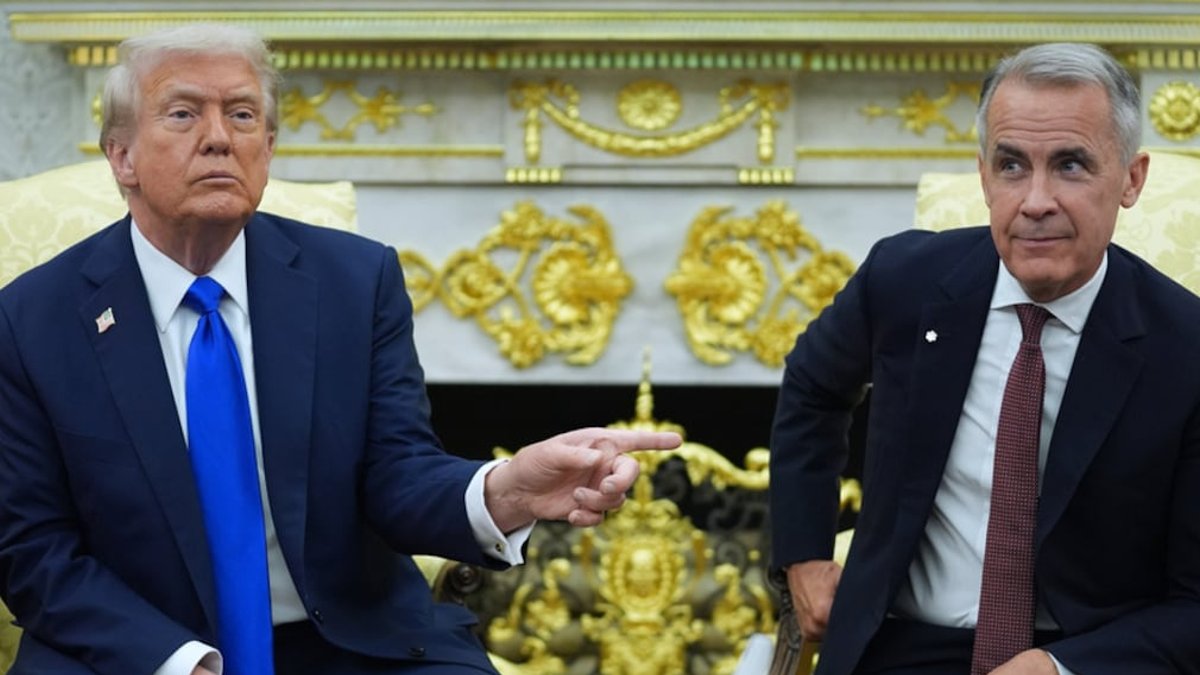
Mark Carney has consolidated political support across Canada after his government rejected a trade agreement with the United States. Prime Minister Carney and his administration are now preparing for a prolonged trade conflict following the collapse of negotiations with Washington. The decision to walk away from the table drew praise from opposition leaders, major business groups, and the country’s largest private sector union, Unifor.
National unity is the stated goal of the current government. Conservative opposition leader Pierre Poilievre, who has frequently criticized Carney in the past, stated that Canada could not accept a “bad deal.” He called for national unity in response to the tariff threat from the United States. The sentiment of solidarity was echoed by many political commentators, who argue that capitulating to Washington would have sacrificed national sovereignty without securing commercial stability.
There was one notable exception to the show of unity. Danielle Smith, the populist conservative premier of Alberta, backed the withdrawal from talks but expressed skepticism about Canada’s response strategy. Her position highlights the internal divisions that persist within the conservative movement regarding how to handle the economic pressure from the south.
Related: Cancun residents protest high electricity bills
Unifor, the largest private sector union and a major force in the automotive industry, supported the government’s move. The group said negotiators had done the right thing by leaving the talks and urged a strategic response against Washington.
Financial impact and retaliation plans
Canadians are facing significant economic exposure. The United States implemented new tariffs of 50 percent on Canadian goods at midnight on Saturday. These duties target approximately $28 billion worth of Canadian exports, equivalent to about $20 billion in U.S. terms, with a heavy focus on manufacturing sectors. Ottawa has announced it will match these tariffs “dollar for dollar” starting on September 8.
Royal Bank of Canada (RBC) has projected that these new tariffs could reduce the country’s Gross Domestic Product (GDP) by about four-tenths of a percent. The bank identified electronics, textiles, furniture, lumber, and paper as the most vulnerable industries. Business leaders generally agree that avoiding a bad agreement is preferable, though they warn that the resulting uncertainty could stifle investment and prolong the economic pain.
Related: Employer group slams rising teachers pension costs
The political rhetoric on the other side of the border has intensified. President Donald Trump remained silent on Saturday but returned to social media early Sunday morning. He labeled the trade relationship “continuous discrimination” and “unfair treatment,” accusing Canada of seeking the benefits of a state without the obligations. In a post on Truth Social, he wrote that “Canadá wants the benefits of being a state, without being one,” and added that he would no longer tolerate high tariffs imposed on U.S. farmers for many years.
U.S. Trade Representative Jamieson Greer told Fox News that no new negotiations were scheduled with Canada. He framed the tariffs as a countermeasure to a year of retaliation over trade policies. The dispute is already drawing criticism from Democratic governors in the United States. Gavin Newsom of California and Abigail Spanberger of Virginia argued that attacking a key economic partner would hurt American producers. Even former Vice President Mike Pence warned that the conflict poses risks to the world’s largest economy at a time when American consumers are already dealing with high costs.


Leave a Reply