
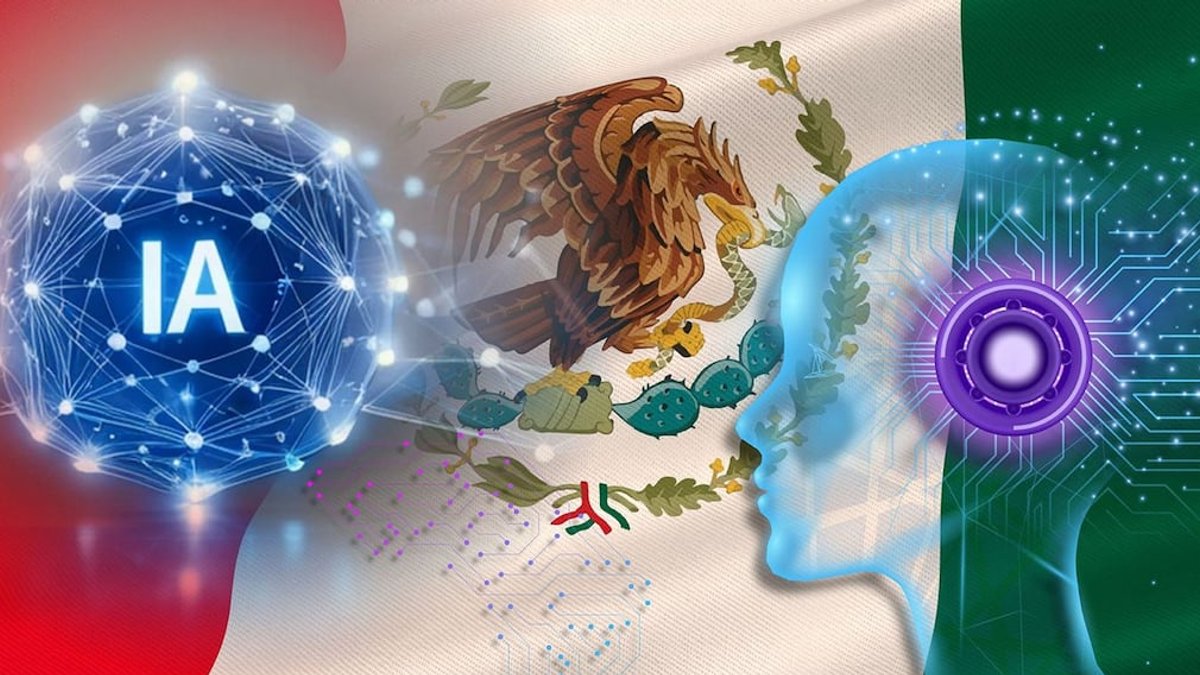
Two-thirds of Mexican companies are stuck in pilot tests of artificial intelligence (AI), unable to make the leap to a real transformation of their business. A study by IPADE, Accenture, and Empresas Globales reveals that while companies know they need to adapt to AI to stay competitive, few have been able to turn this urgency into a sustainable competitive advantage.
The technology is within reach of companies; what is lacking is the knowledge of how to use it to transform the business model. The Digital Maturity Report by Needed Education confirms this ambivalence, stating that most organizations apply AI in small pieces and few are redesigning processes from start to finish.
The digital maturity index reaches a level of 47%, which means that companies in Mexico are at an intermediate stage of digital transformation. To take advantage of the full potential of AI, companies must move from pilot tests and small use cases to scaling and incorporating AI into central processes.
Many organizations need to reinvent themselves and rethink the way they generate value. This challenge points to a key capacity in companies: talent. The study “¡Ay, ay, ay, AI!” notes that the lack of talent is perceived as one of the biggest obstacles and that talent and culture are the most lagging enablers of AI, with 45% of companies at a low level of preparation.
The World Economic Forum’s Future of Jobs Report 2026 shows that employers expect the skills that will grow most in importance from 2025 to 2030 to be those related to technology, including AI and big data, networks, and cybersecurity, as well as technological literacy. The same document highlights that the skills gap is the main barrier to transformation in businesses.
In Mexico, technological skills are becoming an increasingly relevant factor in hiring people. The Digital Maturity Report 2026 states that at the operational level, basic AI management is becoming a transversal criterion for almost all profiles. For CEO positions, between 5 and 10 percent of the evaluation criteria include questions about previous experience related to AI.
Related: Canada stands firm with Carney against Trump tariffs
Organizations are looking for a hybrid profile that has a technical background to understand what AI can do, but also needs to have a business understanding to know where to generate value. This profile serves as a bridge between the technological and business worlds and can have a profound impact on organizations. However, it is a very scarce and in-demand profile.
Critical thinking applied to AI outputs is a human capacity whose importance is enhanced in the business environment. It requires a basic understanding of how models work. Ethical judgment and responsibility are also critical, particularly from an institutional perspective.
Companies are at a crossroads: they know they need to exploit new technologies and that, beyond isolated efforts, they require a transformation in value generation. But identifying these opportunities requires people who can understand technology and business at the same time, and this talent is scarce today.
Mexican companies that invest in forming or attracting this hybrid profile, and in developing critical thinking and ethical judgment that AI demands, will be the ones that capture the competitive advantage in the coming years. They will need to invest in people with the right skills and knowledge to unlock the full potential of AI.
Those that limit themselves to buying more technology without resolving their talent deficit will remain trapped in the pilot phase. As companies move forward with AI implementation, it’s essential to recognize that talent is the key to unlocking its full potential, and that investing in people with the right skills is essential for achieving success.
Investing in pension packages that attract and retain top talent can be a strategic move for companies looking to stay competitive in the AI setting.


Leave a Reply