
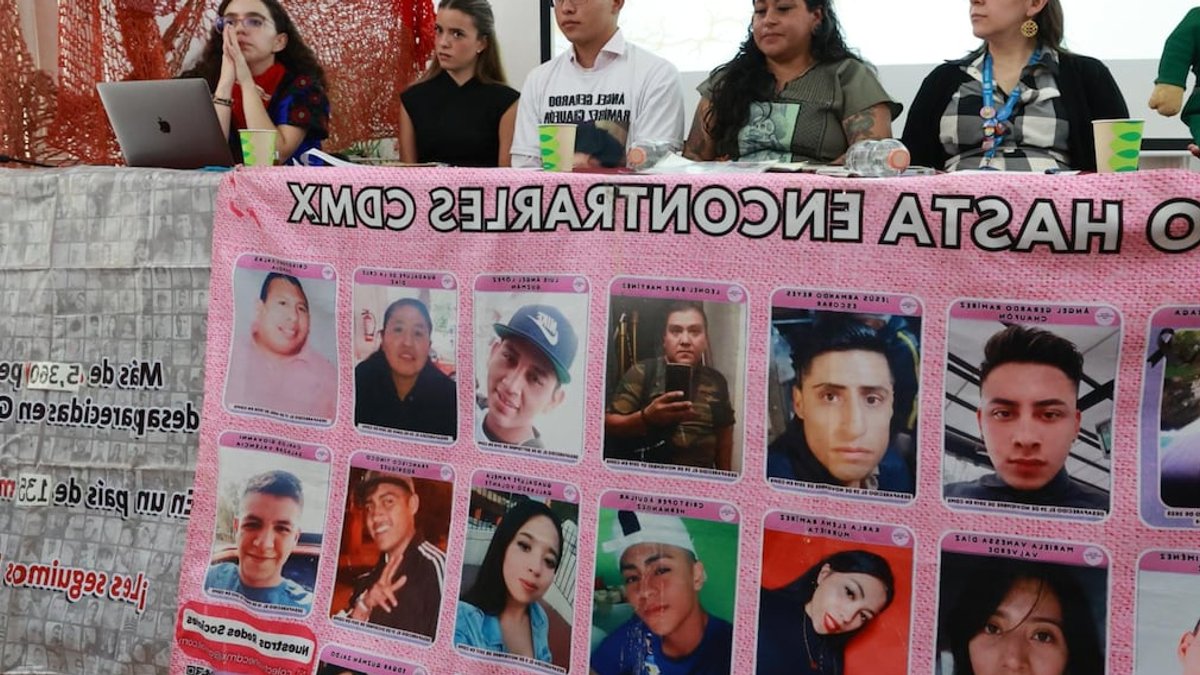
At least 58 clandestine graves in Mexico have been tied to femicides from 2020 to 2024, with 60% discovered on private property, according to a report released in Mexico City.
The study, Trazar la Ausencia, Caminar la Esperanza (Tracing the Absence, Walking the Hope), examined grave discoveries from 2006 to September 2024. Mexico faces a broader crisis, with over 134,000 officially registered missing persons and more than 83,000 unidentified human remains in state custody.
Femicides drive grave discoveries
From January 2020 to September 2024, the research team documented 58 graves connected to femicides, where 92 women were found. The highest count—22 graves—occurred in 2024, followed by 13 in 2022, 10 in 2023, seven in 2020, and six in 2021.
To establish a link to femicide, investigators matched media reports with gender-based criteria in Mexico’s federal penal code. The findings challenge assumptions about where victims are disposed of, often in locations tied to their daily routines.
Private property as a crime scene
Of the graves linked to femicides, 60.7% were on private property, while 14.3% were on open land. The remainder appeared in areas like roads, hills, ravines, wells, or bodies of water.
Mariana Marchand, a researcher with the Human Rights Program at Universidad Iberoamericana, said 38.2% of these private properties belonged to the victim, the perpetrator, or were shared between them. She called this a poorly documented aspect of the country’s femicide and disappearance crisis.
Related: Pension experts sceptical over CDC schemes
Marchand explained that authorities could use this data to improve searches for missing women, especially when families request property inspections. Technical difficulties in searching private property mean many victims may never be recovered.
The report also found that 70% of the documented cases were officially classified as femicides. In the remaining cases, no evidence suggested an attempt to hide the gender-based nature of the crimes.
From 2020 to 2024, the study identified 355 female victims and 1,151 male victims in clandestine graves, meaning three out of four bodies were men. However, femicide-linked graves follow a distinct pattern, often allowing for victim identification and crime reconstruction.
State records differ from media reports
The broader study recorded 5,152 graves reported by prosecutors between 2006 and September 2024, containing 5,718 bodies. Over the same period, media outlets reported 3,516 graves, but with 8,341 bodies and 52,305 human remains.
Andrea Horcasitas, part of the research team, noted that while prosecutors logged 46% more graves than journalists, reporters documented 46% more bodies. The difference suggests gaps in official record-keeping or variations in case categorization.
The pattern of femicide-linked graves on private property raises concerns about undetected cases in homes, backyards, or rental units. For now, the data provides a stark view of a crisis that continues unchecked.


Leave a Reply